
Auto Accident Attorneys in Culpeper, Virginia
One of the most serious causes of personal injury in the United States is accidents involving motor vehicles, including car accidents. Most auto accidents are preventable and caused by negligent, irresponsible, and distracted drivers who are not paying proper attention to the road. Read More
Motorcycle Accident Attorneys in Culpeper, Virginia
All motorcyclists acknowledge the inherent risk when they take to the road each day. A rider must be more skilled at maneuvering the road and must react more quickly to any possible danger. Read More
Pedestrian Accidents Lawyer in Culpeper, Virginia
When two vehicles of any type get into an accident, they have a number of different safety features which protect the drivers and passengers from harm. However, when a vehicle hits a person who is walking and does not have any protection, the consequences can be catastrophic and even life-threatening. Read More
Trucking Accidents Attorneys in Culpeper, Virginia
Have you or a loved one recently been involved in a truck accident? You need a competent personal injury lawyer to represent you! Trucking accidents have the potential to cause some of the most serious and catastrophic injuries in both drivers and passengers. Read More
Wrongful Death Lawyers in Culpeper, Virginia
After your loved one has been killed in an accident caused by another person or party, you may not be focused on finding a Culpeper wrongful death attorney or filing a wrongful death lawsuit. You should be able to focus on mourning your family member or loved one and dealing with all of the consequences of their death. Read More
Whiplash and Lower Back Injuries Attorney in Virginia
Have you or a loved one suffered whiplash or a back injury in an accident caused by someone else’s negligence? These injuries are often dismissed as minor, but they can cause lasting pain, limited mobility, and long-term medical complications that affect every part of your daily life. Read More
After an Accident
If you have just been involved in an accident of any type, it can be an extremely stressful whirlwind. At Davies, Barrell, Will, Lewellyn & Edwards, PLC, our Culpeper personal injury lawyers represent clients who have been injured in a wide range of accidents. Read More
TYPES OF INJURIES
At Davies, Barrell, Will, Lewellyn & Edwards, PLC, we offer support, guidance and aggressive representation to people in Culpeper, Virginia who have suffered serious personal injury or the wrongful death of a loved one.

WRONGFUL DEATH LAWYER IN CULPEPER, VIRGINIA
Though accidents sometimes result in fatalities or ultimately-fatal injuries, it sometimes is not clear whether a death was due to, or as a consequence of, a traumatic injury (or medical malpractice) rather than some underlying, latent, medical condition or other unrelated reason. That is why it is essential to have a timely consultation with attorneys familiar with medical issues involved with trauma, physical injuries and fatalities.

TRAUMATIC BRAIN INJURIES IN CULPEPER, VIRGINIA
A traumatic brain injury [“TBI” for short] is a serious brain trauma almost invariably associated with a single event, such as a serious accident involving a blow to the head. In short, the injury does not occur over time.
Unfortunately, despite arising from a single traumatic event, a TBI sometimes is neither timely noticed nor treated and oftentimes is not even apparent at first, following an accident. A TBI often is not timely recognized by either the patient, medical providers, family, or friends because its signs and symptoms — while serious — can mimic, or be mistaken for, other conditions.

BURNS, SCARRING AND DISFIGUREMENT IN CULPEPER, VIRGINIA
Burns, generally, are types of skin and other tissue damage typically resulting from fire, flames, heat conduction or radiation, steam or scalding water, hot or molten liquids and metal, or contact with chemicals or electrical wiring/equipment. Burn injuries might also be internal and the result of the inhalation of hot, super-heated air, chemicals, gasses and/or smoke.
Depending upon location and severity, burns can be life-threatening emergencies, if not fatal, and often result in permanent physical limitations, nerve damage, scarring, contractures and disfigurement. Even minor burns are extremely painful and, though their treatment varies depending on their location and severity, serious infections and nerve damage may result. Most burn patients require lengthy inpatient treatment at specialized burn centers, surgeries and skin grafts, plastic & other reconstructive surgery and months or years of follow-up care.

SPINAL INJURIES AND PARALYSIS IN CULPEPER, VIRGINIA
Spinal injuries are injuries involving trauma to the spine and spinal cord, itself, and/or adjacent nerves. Such injuries invariably are severe and also can be permanent and life-threatening. Depending upon the severity of trauma to the nervous system, doctors may classify spinal cord injuries resulting in paralysis as either “complete” or “incomplete.”
A “complete” injury results in the total loss of all sensory function (feeling) and all motor function (ability to control movement) below the location of injury along the spine. If a patient retains at least some sensory and/or motor function below the location of injury, the paralysis is considered “incomplete.”
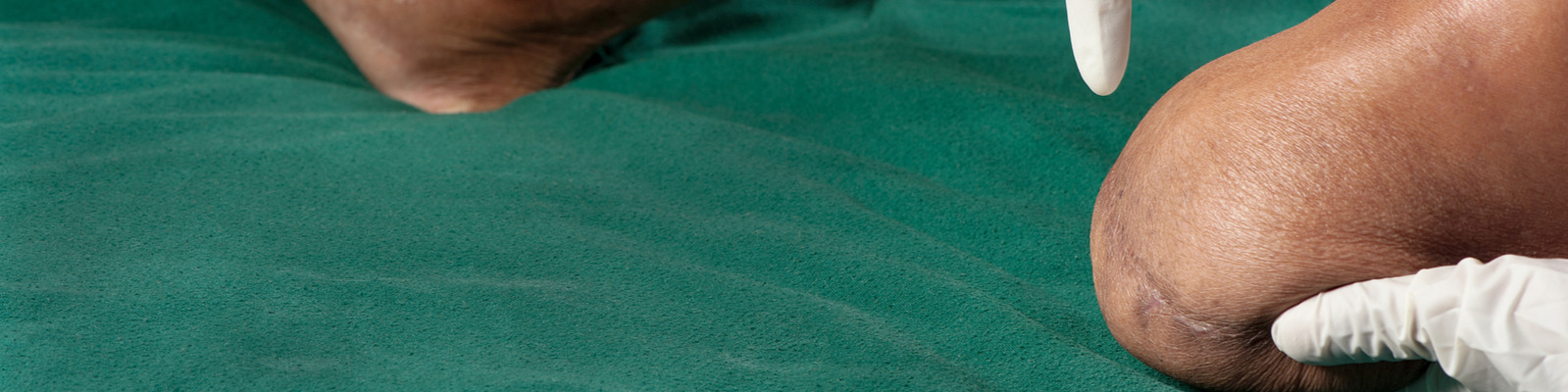
AMPUTATIONS AND OTHER LOSS OF FUNCTIONS
In addition to fractures and joint injuries, sometimes an entire limb might be lost in a traumatic accident. An amputation of fingers, a hand, arm, foot or leg may be the result of trauma or due to surgery necessitated by the severity of damage to the affected limb as a result of trauma.
Certainly limbs lost to trauma are painful, life-threatening, permanent and require surgery (or multiple surgeries). Months and/or years of extensive physical and other therapies, counseling and, if possible, the fitting of a prosthetic limb also are required to restore a patient to health and independent living.

BONE FRACTURES AND JOINT INJURIES
A fracture is just the medical term for a broken bone. Though some bone fractures may result from disease or other illnesses, most are caused by traumatic events, such as accidents, including falls or motor vehicle accidents, or sporting/recreational pursuits. There are many types of fractures, from “simple” fractures to complex breaks necessitating one or more surgeries and the implementation of metal screws, plates and other hardware to repair the bone and joint structures. A “compound” fracture is where the fractured bone penetrates the overlying tissues and skin. A fracture can occur anywhere in one’s skeletal system and vary from routine to severe, permanent and even life-threatening.

NERVE INJURIES
In addition, whether due to an amputation, a simple fracture or some other trauma, an injured person may suffer severe, painful and permanent nerve damage; including Complex Regional Pain Syndrome. Complex regional pain syndrome [“CRPS”] is a chronic pain condition that most often affects a single limb after an injury. CRPS is believed to be caused by damage to the peripheral and/or central nervous systems. CRPS is characterized by severe and prolonged pain as well as changes in skin color, temperature, and/or swelling in the affected area. These symptoms often lead to a permanent loss of use of the limb. CRPS has two (2) categories, CRPS Type I and CRPS Type II. Patients without a confirmed nerve injury are classified as having CRPS-Type I, which previously was known as “reflex sympathetic dystrophy” or “RSD”. Those with CRPS-Type II (previously known as “causalgia”) have been diagnosed with an associated, confirmed nerve injury.
CRPS symptoms vary in severity and duration, although some cases are mild and eventually go away. In more severe cases, individuals may not recover and may have long-term disability.
Local Accidents
If You're A Victim - Contact Us Now
Colonial Beach Man, 74, Killed in Crash at Route 3 and Ridgeway Drive [King George County, VA]
A 74-year-old Colonial Beach man died following a two-vehicle collision…
Who Pays Your Medical Bills After a Car Accident in Virginia?
After a car accident, medical bills can begin arriving before…
Maryland Woman, 50, Killed in Crash at Frost Avenue and Van Roijen Street [Warrenton, VA]
A 50-year-old Maryland woman died following a two-vehicle collision on…
Halloween Pedestrian Safety: Protecting Trick-or-Treaters on Virginia Roads
Halloween brings families into neighborhoods across Culpeper, Orange, Fauquier County,…